
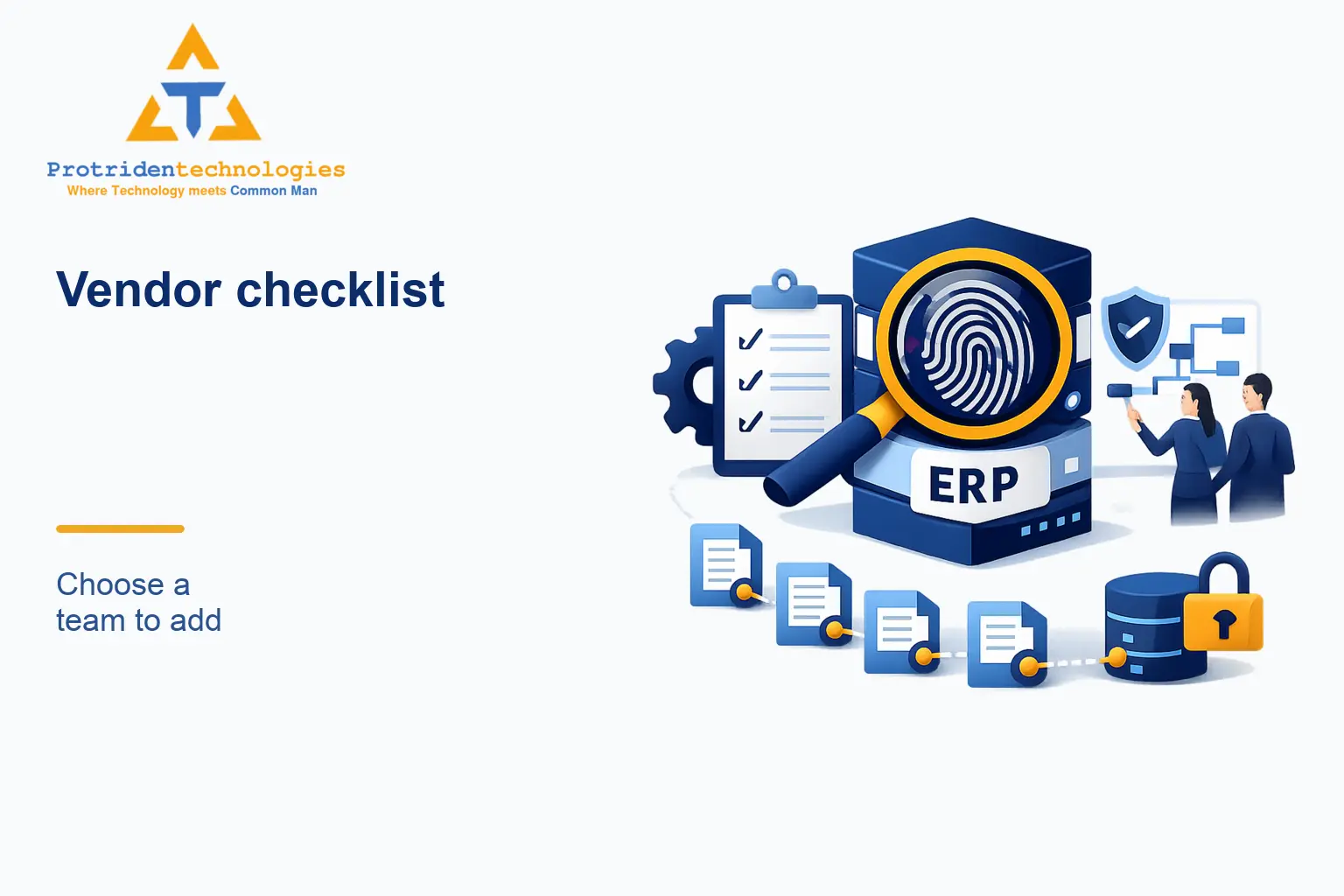
Your organization needs to prove transaction provenance and tamper-evidence from a legacy ERP to win bids or pass a compliance audit. The legacy system lacks modern immutable logging, and internal teams are unsure how to retrofit verifiable trails without disrupting operations or voiding vendor support.
Procurement and regulatory reviewers increasingly request audit-ready evidence—time-stamped, linked, and tamper-evident records—before awarding contracts. Many SMEs and ISVs run core processes on aging on-prem ERP platforms that were never designed for modern audit demands.
Bringing in a specialist team helps scope data mapping, design append-only or tamper-evident logging, implement integration adapters, and validate outputs for auditors while minimizing downtime and risk to ongoing operations.
Why This Topic Matters
Audit trails and tamper-evident logs are not just good practice; in regulated procurements they are evidence. Auditors and procurement evaluators check both the transactions and the controls that govern their creation and modification. Without credible logs you risk disqualification from bids, failed audits, or costly remediation under time pressure.
When a legacy ERP cannot natively produce the required evidence, a retrofit approach that captures transaction context, user identities, timestamps, and immutable change history creates the traceable record reviewers expect. A proper retrofit preserves business continuity while delivering an auditable chain of custody.
Selecting the right vendor matters because this work sits at the intersection of application architecture, security engineering, data mapping and audit validation. Choose a provider who can operate in live environments, produce verifiable outputs, and communicate with auditors and procurement teams.
- Auditors evaluate both transactions and the controls that produced them; logs alone are insufficient without mapped context and validation (see S2).
- A successful retrofit requires field-by-field data mapping and validation so log entries can be tied back to original records and reports (see S3).
- Vendor evaluation must include verification of how logs are protected, preserved, and presented for review (see S6).
Research references: ERP Audit Trail: What Part 11 Auditors Need Beyond System Logs | Ampwise AI; Checklist for ERP Audit Readiness | PSG; ERP Vendor Evaluation Checklist: CIO's Complete Guide (2026).
Common Mistakes Businesses Make
Teams often mistake raw system logs for audit-ready trails. Native logs may lack contextual mapping, user intent labels, or immutable storage, making them inadequate for procurement or regulatory review.
Another common error is rushing a fragile one-off script that writes logs to a local file or an admin console. These quick fixes are easy to tamper with and typically fail auditor scrutiny.
Finally, projects fail to define acceptance criteria with stakeholders. Without test cases or auditor-focused sampling, delivered logs may technically exist but lack the evidence needed to resolve vendor queries or audit findings.
- Relying on native system logs without mapping to business transactions.
- Storing logs in mutable or poorly controlled locations (local disks, user directories).
- Skipping risk-based transaction sampling and auditor validation during UAT.
- Failing to document transformation rules and retention policies needed by reviewers.
Practical Checklist / Steps
Use this checklist to structure vendor conversations, evaluate proposals, and plan a phased retrofit. Each step aligns to a deliverable you can require in the SOW, so proposals are comparable across vendors.
Expect the work to be delivered in phases: discovery and mapping, logging adapter prototype, secure storage and tamper-evidence, validation and sampling, and handover with documentation.
- Establish clear acceptance criteria: Require vendors to propose specific acceptance tests: transaction sampling, reproduction of historical reports from logs, and auditor-ready export formats. Acceptance criteria should be part of the SOW and drive test cases.
- Inventory sources and touchpoints: Document every ERP table, API, integration middleware, file feed and report that influences the audited process. Include archived data and external feeds that auditors might request during evidence collection.
- Perform field-level data mapping: Map each business transaction to the fields and events that create or change it. The mapping must show how a log entry ties to a specific transaction, user, timestamp and pre/post values.
- Design tamper-evident storage: Specify append-only storage with cryptographic integrity checks (hash chains, signed checkpoints or equivalent). Define retention, encryption, and access controls to protect the audit trail.
- Prototype a non-invasive capture adapter: Start with a read-only adapter that captures events without changing ERP behavior. Vendor should demonstrate the adapter in a staging environment and show sample log exports before any production deployment.
- Define security and access controls: Require role-based access to logs, separation of duties, and logging of administrative actions. Describe how the vendor will protect signing keys and who controls cryptographic material.
- Agree a test plan with auditor scenarios: Work with internal audit or an external auditor to build a test plan: which transactions to sample, how to reproduce reports from logs, and what evidence formats the auditor accepts.
- Validate logs against historical samples: Run transaction sampling to confirm that logs can reproduce known historical reports or invoice sequences. Capture discrepancies and require corrective actions in the vendor deliverables.
Cost, Timeline, or Decision Factors
Cost and timeline vary widely depending on legacy technology, volume of transactional data, the number of integration points, retention requirements, and how intrusive the solution must be. Rather than fixed prices, vendors should provide options tied to scope: prototype only, phased rollout, or full production hardening and handover.
Your procurement decision should weigh vendor experience in retrofit projects, demonstrated ability to produce auditor-friendly exports, and a clear plan for key management and long-term storage. Prioritize vendors who include acceptance tests and audit engagement in their proposals.
- Legacy platform complexity: customizations, undocumented schemas and homegrown integrations increase effort and risk.
- Data volume and retention: high volumes or long retention windows affect storage and verification strategies.
- Desired level of immutability: cryptographic signing or blockchain-like anchoring raises implementation demands and key-management obligations.
- Operational risk tolerance: zero-downtime non-invasive adapters cost more but reduce business disruption.
- Audit readiness requirements: whether auditors expect live reproduction, signed exports, or sealed archival snapshots.
Local Relevance: India, Karnataka, and Udupi
Protriden Technologies is based in Kundapura, Udupi, Karnataka, India. That local presence can help with on-site discovery, stakeholder interviews, and working within Karnataka or regional procurement timelines.
For Indian organizations, factor in procurement and compliance interactions that may require clear documentation, local point-of-contact, and the ability to deliver auditor-ready exports in standard formats used by reviewers.
- Choose a vendor who can operate locally or provide clear remote engagement plans; Protriden offers local services from Kundapura with cloud and on-prem capabilities.
- Ensure the SOW explains how deliverables will be presented to Indian auditors and procurement evaluators, including language and document formats.
- Plan for secure key custody and storage arrangements that meet your internal policies for Indian operations.
How Protriden Technologies Can Help
Protriden Technologies provides the skills typically required for this work: custom ERP and workflow automation, application security, cloud deployment, and CI/CD. We can perform discovery, implement capture adapters, design secure log storage, and produce auditor-focused documentation and exports.
Our approach emphasizes minimal operational disruption: we prototype a read-only adapter and validate evidence before production hardening. Deliverables include mapping documentation, sampled validation runs, and operational handover materials suitable for procurement or audit reviews.
- Discovery and data mapping across legacy ERP tables and integration points.
- Prototype and deploy non-invasive logging adapters and secure storage.
- Validation and test runs that reproduce reports from logs and provide auditor-friendly exports.
- Post-deployment support: key management guidance, monitoring, and maintenance.
Final Thoughts
Retrofitting audit trails into legacy ERP is a targeted, practical step that preserves existing investments while delivering the evidence buyers and auditors expect. The right vendor will translate compliance demands into clear technical deliverables, reduce risk during deployment, and hand over maintainable artifacts.
When evaluating proposals, insist on acceptance criteria, demonstrable prototypes, and vendor responsibilities for secure key handling and documentation. These elements turn a vague promise of 'auditability' into verifiable outcomes you can use in bids and audits.
FAQs
Will adding audit trails to our legacy ERP require major code changes?
Not necessarily. Many retrofits use non-invasive capture adapters, database triggers, or middleware that reads transactional messages to create a parallel audit stream. The right approach depends on your ERP's architecture and constraints; discovery will identify minimally intrusive options.
How long does a retrofit typically take?
Timelines vary by scope. Factors include the number of transaction types to capture, undocumented customizations, and required validation with auditors. A typical delivery model is phased: discovery and mapping, prototype, validation, then production hardening. Ask vendors to provide a phased timeline tied to scope rather than fixed dates without discovery.
How do we prove logs are tamper-evident to an auditor?
Auditors look for chains of custody, cryptographic integrity checks, sealed snapshots or signed checkpoints, and documentation tying logs back to business transactions. The vendor should demonstrate how signatures or hashes are generated, where keys are stored, and provide sample exports that reproduce known reports.
Will retrofitting logs affect ERP performance?
A well-designed, read-only adapter minimizes performance impact. Triggers or synchronous logging can affect performance if not carefully implemented; the discovery phase should include performance tests and a low-impact prototype in a staging environment before production rollout.
What should we require from vendors in the SOW to avoid disputes?
Specify acceptance tests (sample reproduction, auditor export formats), deliverables (mapping docs, key management plan, monitoring), responsibilities for secure storage and access control, and post-deployment support. Clear criteria for sign-off reduce ambiguity during procurement and audits.
Request a technical assessment to scope audit-trail remediation for your legacy ERP and receive a phased plan and acceptance-test checklist.
Explore our software development services or discuss your requirements with the Protriden Technologies team.