
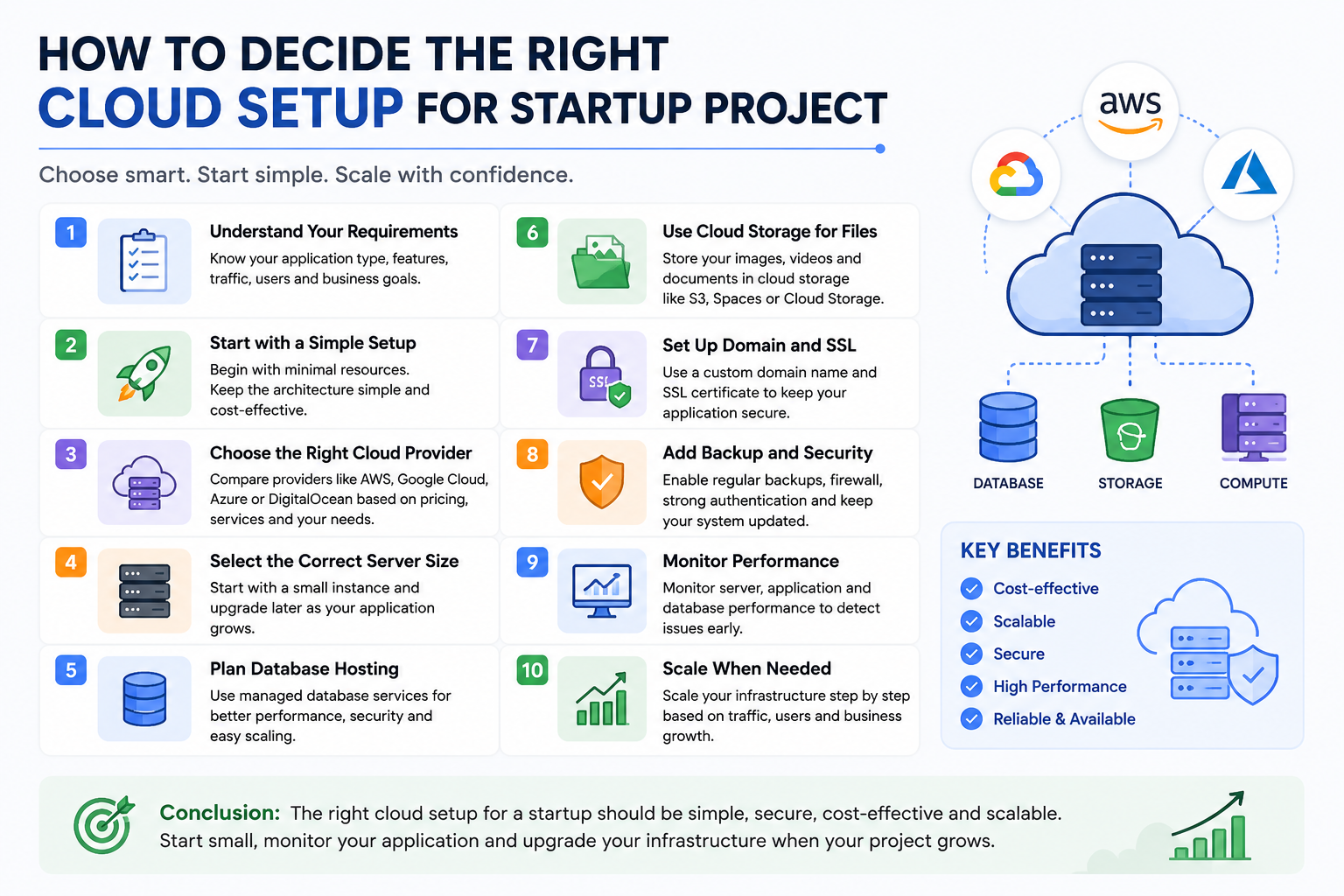
Choosing the right cloud setup is very important for any startup project. A good cloud setup helps your application run smoothly, scale easily, and reduce unnecessary server costs.
1. Understand Your Project Requirements
Before choosing a cloud setup, understand what your application needs. Check whether your project is a website, mobile app backend, admin panel, API service, or a large platform with multiple users.
2. Start with a Simple Setup
For most startup projects, it is better to start simple. You can begin with one server, one database, and basic storage. This keeps the cost low and makes management easier in the beginning.
3. Choose the Right Cloud Provider
Popular cloud providers include AWS, Google Cloud, Microsoft Azure, DigitalOcean, and Linode. For startups, DigitalOcean and AWS Lightsail are good options for simple hosting, while AWS and Google Cloud are better for larger scalable systems.
4. Select the Correct Server Size
Do not start with a very large server unless your application already has high traffic. Choose a basic server first and upgrade later when your users increase.
5. Plan Database Hosting
Your database should be secure and reliable. For small projects, the database can run on the same server. For growing projects, it is better to use managed databases like AWS RDS, Google Cloud SQL, or managed MongoDB services.
6. Use Cloud Storage for Files
If your application uploads images, documents, videos, or user files, use cloud storage instead of storing files directly on the server. Services like AWS S3, DigitalOcean Spaces, or Google Cloud Storage are better for file management.
7. Set Up Domain and SSL
Every production application should use a proper domain and SSL certificate. SSL keeps the website secure and builds trust with users.
8. Add Backup and Security
Always enable regular backups for your server and database. Also secure your server using firewall rules, strong passwords, SSH keys, and updated software.
9. Monitor Performance
After deployment, monitor server usage, errors, API response time, and database performance. This helps you find problems early and improve the system before users are affected.
10. Scale When Needed
Do not overbuild the cloud setup in the beginning. Start with a simple architecture and scale step by step when traffic, users, or business needs increase.
Conclusion
The right cloud setup for a startup should be simple, secure, cost-effective, and scalable. Start small, monitor your application, and upgrade your infrastructure when your project grows.