
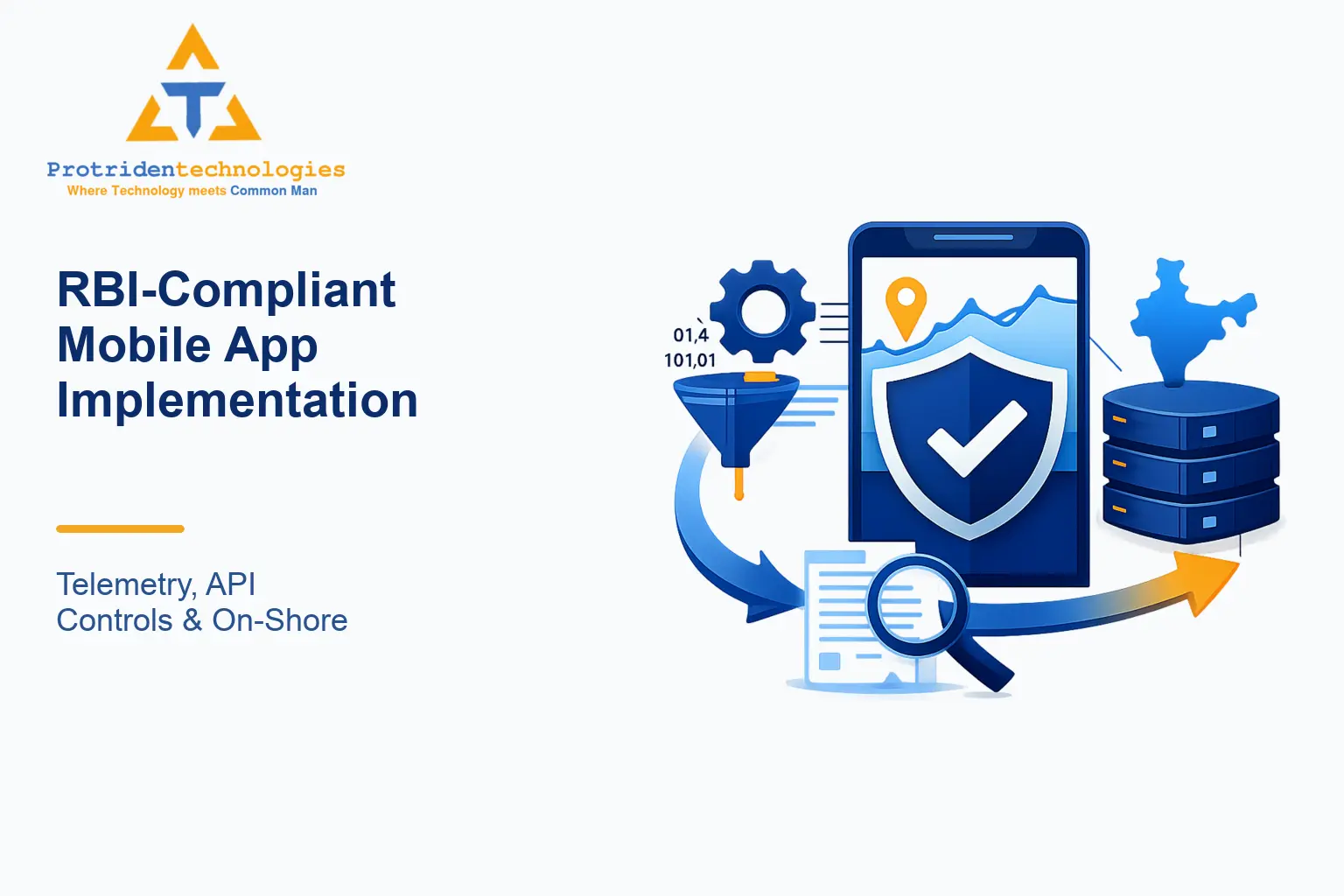
Lenders and NBFCs face mounting regulatory scrutiny over mobile lending apps: the RBI and associated guidance expect clear telemetry, evidence of app‑store monitoring, API access controls and appropriate data residency. Many product teams must remediate legacy apps quickly to produce audit artifacts and avoid compliance actions.
Engineering and product teams need a practical remediation path that delivers audit-ready telemetry schemas, API gating patterns and a controlled on‑shore storage plan without disrupting core lending flows.
This article outlines why telemetry, app‑store monitoring and API controls matter, common mistakes, a practical checklist for a remediation pilot and decision factors that shape cost and timeline.
Why This Topic Matters
Regulatory expectations for digital lending apps have shifted from advisory to operational: lenders must demonstrate how apps collect, secure and retain operational telemetry; how they prevent abusive data collection; and how they monitor app listings to detect non‑compliant behaviour. Proper telemetry and API controls provide the audit trail RBI reviewers expect and help detect service degradation, fraud signals and privacy violations. Sources covering mobile app security and RBI guidance stress the importance of telemetry, secure APIs and compliance-focused testing for lending apps.
A focused remediation approach reduces inspection risk, speeds evidence collection for audits, and supports safer customer experiences by eliminating prohibited data collection like contact scraping and by enforcing least-privilege access to backend services.
- Telemetry creates immutable operational evidence for audits and product analytics.
- API gating controls limit data access and reduce attack surface for loan pipelines.
- App‑store monitoring documents public app behaviour and permission claims.
- On‑shore storage and controlled retention align with Indian data residency and regulatory expectations.
Research references: Can Mobile App Security Testing Secure Indian Lending Apps?; RBI Compliance Requirements for Loan Management Systems (LMS) | Nelito | Blog; Mobile Finance App Security Compliance in India | Guardsquare.
Common Mistakes Businesses Make
Teams often treat telemetry as a debugging aid rather than compliance evidence. That leads to incomplete schemas, missing identifiers for audit trails, and unclear retention policies. Another frequent error is over-collecting device permissions or call/contact data that regulators explicitly flag as unacceptable for lending apps.
Operationally, many lenders retrofit telemetry into mature apps without gating APIs or revalidating backend access controls. This creates gaps where telemetry shows suspicious activity but APIs still allow unauthorised data flows. Finally, app‑store monitoring is overlooked until a regulator requests proof of public-facing behaviour.
- Incomplete telemetry schema that omits session identifiers, event timestamps or consent markers.
- Collecting unnecessary PII or device data such as contacts or call logs.
- No API-level rate limiting or authorization checks tied to telemetry signals.
- Lack of automated app‑store monitoring to capture permission changes or evidence of spoofed apps.
- No documented retention and deletion policy aligned with compliance and audit needs.
Practical Checklist / Steps
Use this checklist to scope a targeted remediation pilot that delivers audit artifacts and a repeatable implementation pattern. The pilot should focus on telemetry schema, API gating, secure storage, and app‑store monitoring, and must include compliance and security testing.
- Define compliance objectives and success criteria: Work with compliance and legal to define what RBI evidence looks like for your organization: required telemetry events, minimum retention windows, consent markers and prohibited data elements. Capture these as measurable success criteria for the pilot.
- Design a minimal telemetry schema for auditability: Create an event taxonomy that includes immutable timestamps, anonymized device/session IDs, user consent state, event origin (UI/API), and correlation IDs for API calls. Ensure events required for dispute or investigation (login, consent, loan offer, disbursal, repayment attempts, permission changes) are included.
- Implement API gating and authorization patterns: Apply least‑privilege on backend APIs: require strong authentication, enforce role scopes, rate limits and anomaly thresholds that can be correlated to telemetry events. Gate sensitive endpoints so they only respond when telemetry indicates legitimate client state.
- Plan on‑shore storage and retention controls: Design storage for encrypted telemetry and audit logs hosted on on‑shore infrastructure, with clear retention and deletion workflows. Ensure access to stored telemetry is auditable and limited to authorized roles.
- Add automated app‑store monitoring: Set up automated checks for listed permissions, package tampering, user review sentiment indicators and cloned apps. Capture snapshots of app store pages and permission disclosures as part of audit evidence.
- Remove prohibited data collection and validate permissions: Audit all permission requests and eliminate any that read contacts, call logs or other prohibited datasets. Replace invasive signals with consented, privacy-preserving alternatives.
- Perform security and compliance testing: Run mobile app security tests (static and dynamic analysis), server-side VAPT for APIs, and a compliance checklist review. Produce test reports that can be packaged with telemetry evidence for reviewers.
- Run a closed pilot and collect artifacts: Deploy instrumentation to a controlled user group. Collect telemetry, API logs, app‑store snapshots and security test reports. Validate that artifacts meet the success criteria defined earlier.
Cost, Timeline, or Decision Factors
Cost and timeline depend on the current app architecture, the scope of telemetry gaps, API maturity and whether on‑shore hosting already exists. Legacy native apps with monolithic backends will take longer to retrofit than modular apps with middleware for telemetry. Security testing and remediation cycles also add time depending on findings.
Key trade-offs include balancing the depth of telemetry (more fields yield richer auditability but increase storage/processing costs) against retention windows required by compliance. App‑store monitoring can be matured incrementally but should be in place before major audits.
- Existing backend telemetry and logging: reduces effort and timeline.
- Need to redesign data flows for on‑shore residency: increases timeline and compliance work.
- Extent of prohibited permission removal and UI changes: affects product and release schedules.
- Security testing findings and remediation severity: can add weeks for fixes and retesting.
- Organizational approval cycles and legal review: influence start date and scope.
Local Relevance: India, Karnataka, and Udupi
In India, RBI guidance and related compliance expectations for digital lending apps emphasise secure app behaviour, appropriate permission use and evidence‑quality telemetry. Indian lenders must demonstrate that apps do not collect prohibited data and that telemetry supports regulatory reviews. Mobile app security testing and adherence to compliance checklists are central to this expectation.
For teams in Karnataka — including Protriden Technologies in Kundapura, Udupi district — the proximity to local engineering talent and the company’s regional presence can simplify coordination for a pilot, on‑site reviews and handoff. On‑shore storage design should be aligned with Indian data residency expectations and select cloud or datacenter options available within India.
- RBI guidance underscores removing invasive permission collection and ensuring secure app behaviour.
- Local engineering resources in Karnataka can support rapid pilot iterations and regulatory packaging.
- Design on‑shore telemetry storage so access controls and audit trails meet Indian compliance expectations.
How Protriden Technologies Can Help
Protriden Technologies can run a focused remediation pilot that implements the telemetry schema, API gating, app‑store monitoring and an on‑shore storage plan. Services used during the pilot include mobile app development, API and backend adjustments, security testing, cloud deployment and monitoring, and delivering packaged audit artifacts for compliance reviewers.
Our pilot emphasizes quick, repeatable deliverables: documented telemetry schemas, API gating patterns, automated app‑store snapshots, and security test reports. Work is coordinated with your compliance stakeholders to make artifacts usable for regulatory review.
- Mobile app instrumentation and telemetry schema design.
- API hardening, rate limiting and authorization patterns.
- On‑shore storage design and secure deployment on approved infrastructure.
- Mobile security testing (SAST/DAST) and server VAPT coordination.
- App‑store monitoring automation and evidence packaging.
- Documentation and deliverables that support compliance reviews.
Final Thoughts
RBI‑aligned mobile remediation is a cross-functional effort: engineering, product, legal and security must collaborate to produce auditable telemetry, enforce API controls and align storage with residency expectations. Treat telemetry as compliance evidence first and analytics second when planning remediation.
A focused pilot approach reduces risk and delivers tangible artifacts quickly. Prioritise the events, APIs and permissions that map directly to regulatory concerns and iterate from there.
FAQs
What telemetry events are essential for RBI audits?
Essential events include immutable timestamps, anonymized session or device correlation IDs, user consent state changes, key product events (loan offer, acceptance, disbursal, repayment attempts), permission grant/revoke events and API call correlation information that links client actions to backend responses.
Can we keep telemetry off‑site if our main app servers are hosted outside India?
Data residency considerations require careful design. On‑shore storage for telemetry and audit logs is recommended to ensure regulatory expectations for access and control are met. The decision depends on your legal and compliance review; Protriden can design storage patterns that localize sensitive audit artefacts while integrating with global services.
How do we avoid collecting prohibited data like contacts or call logs?
Audit all permission requests and remove any that access contacts, call history or similar sensitive device data. Replace invasive signals with consented, privacy-preserving alternatives (for example, user-provided contacts only when explicitly consented for a specific use case) and document those consent flows.
What kind of security testing should be included in the pilot?
Include mobile app static and dynamic analyses, server-side vulnerability assessment and penetration testing for APIs, plus verification that telemetry and logs are tamper-resistant and access‑controlled. Produce packaged test reports as part of audit evidence.
How long does a compliance remediation pilot typically take?
Duration varies with app maturity and scope. Protriden offers a focused pilot engagement option; timelines depend on telemetry gaps, API changes required, security testing scope and any hosting changes. Discussing your app's current architecture is the best way to estimate a timeline.
Contact Protriden to discuss a focused remediation pilot and see how we can help scope telemetry, API controls and on‑shore storage for your lending app.
Explore our software development services or discuss your requirements with the Protriden Technologies team.