
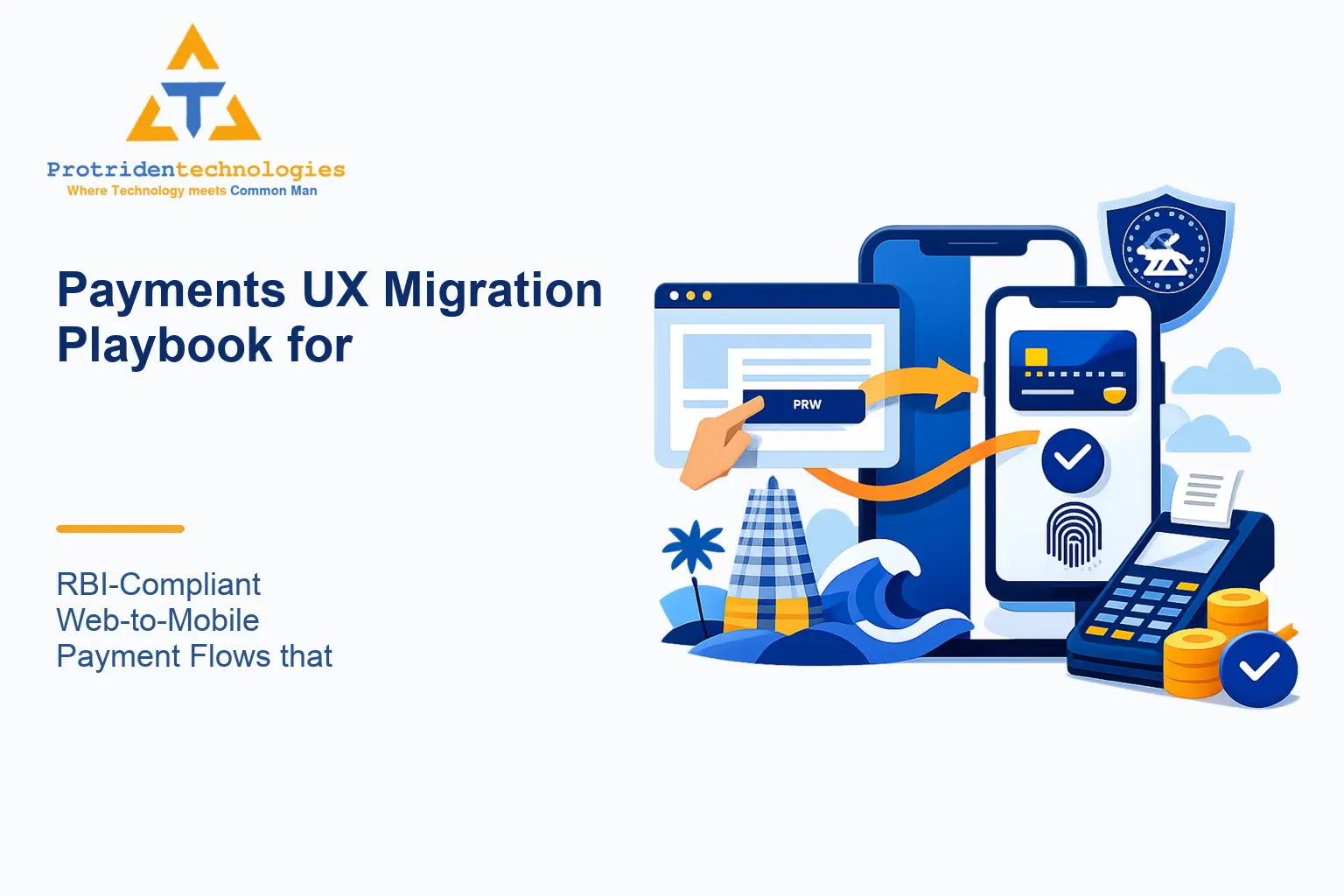
Product and payments teams face rising regulatory complexity while trying to move users from desktop or web checkout flows to mobile apps that convert. Compliance changes from the Reserve Bank of India require stronger authentication and transaction binding, and poorly executed migrations risk conversion loss, new re‑authentication friction and operational rework.
Many teams must rework authentication, device binding and recurring-payment flows to satisfy RBI directions while preserving one-tap convenience on mobile. The migration must balance security, UX and engineering constraints.
Technical and product owners need a practical roadmap: which flows to redesign first, where transaction-linked dynamic authentication matters, and how to coordinate payment gateway, UPI AutoPay and merchant integrations for a low-friction cutover.
This playbook focuses on actionable steps for Indian businesses — especially mobile-first and hybrid web-to-app adopters — to migrate payment UX safely and measurably with compliance and conversion in mind.
Why This Topic Matters
RBI directions and circulars in recent years have tightened expectations for authentication on digital payments. Transaction-linked authentication, device binding and changes to recurring payments (such as UPI AutoPay reauthorisation behaviour) directly impact how web flows map to mobile screens and how merchants coordinate gateway switches.
For product teams the stakes are operational and commercial: migrations that ignore compliance or UX subtleties can force mass re-authorisations, reduce completion rates at checkout and increase support load. Getting the migration right preserves revenue and reduces regulatory friction.
- RBI master guidelines define standards for mobile banking transactions and authentication expectations for payment flows; compliance needs to be part of flow design and vendor selection. (S1)
- Recent RBI directions update authentication mechanisms and emphasize transaction-linked dynamic authentication for digital payment transactions, impacting how second‑factor prompts are implemented. (S4)
- Industry guidance highlights transaction-binding and device-binding as core elements of two‑factor strategies; UPI and wallet behaviours must be retained or adapted to meet these expectations. (S5)
- Practical migration notes from payment gateway providers recommend planning for re-authorization windows and subscriber notifications for recurring payments when moving gateways or changing app-based flows. (S2)
Research references: Master Circular – Mobile Banking transactions in India; Switching Your International Payment Gateway: A Migration Guide for Indian Businesses (2026) - Razorpay Blog; Notifications | Official Website of Reserve Bank of India; Rbi's Mandatory Two‑factor Authentication for Digital Payments: India Compliance Guide (2026) - Global Advisory Experts.
Common Mistakes Businesses Make
Teams often treat web-to-mobile as a UI translation rather than a re-architecture of authentication and session models. Web flows that relied on SMS OTPs, cross-domain cookies or long-lived sessions can break under RBI requirements for cryptographic binding and stronger device verification.
Operational oversights during migration — such as failing to pre-notify subscribers of UPI AutoPay re-authorisation needs, not coordinating with banks and aggregators, or not testing fallback paths — cause user drop-off and elevated support costs.
- Assuming web OTP flows will work unchanged on mobile; RBI guidance is moving away from SMS-only OTPs toward transaction-linked second factors. (S4, S5)
- Neglecting device binding and secure PIN entry isolation; new directions require cryptographic binding of the second factor to transaction parameters. (S5)
- Not mapping recurring-payment ownership and re-authorisation requirements when changing gateways or moving from web to app, leading to failed AutoPay renewals. (S2)
- Skipping wide-bandwidth and offline/poor-network testing for regions where users may rely on intermittent connectivity, which can increase failure rates post-migration.
Practical Checklist / Steps
Use this checklist to scope a phased migration from web checkout to a mobile-first payment flow. Treat each item as a cross-team checkpoint that involves product, engineering, payments operations and compliance.
Prioritise flows by revenue impact (checkout, wallet top-up, recurring payments) and run a short pilot before broad rollout.
- Map all payment touchpoints and dependencies: Inventory web and mobile payment entry points, third-party gateways, UPI handles, AutoPay subscribers and bank integrations. Identify flows that will require reauthorisation, device binding or cryptographic transaction-binding.
- Classify flows by regulatory sensitivity and commercial impact: Tag flows as high (recurring AutoPay, large-value transactions), medium (single-checkout with saved card) or low risk. Prioritise high-impact flows for early migration and compliance validation.
- Engage payment gateway and PSP partners early: Confirm each partner’s support for the required authentication modes, transaction binding, UPI AutoPay migration behaviour and any re-authorization steps needed when changing gateways or app contexts. Document integration contracts and timelines.
- Design secure, native authentication UX: Implement device-binding checks and render second-factor entry (UPI PIN or secure in-app PIN entry) in a secured context. Ensure the UI explains why the extra step is needed and show transaction details clearly to reduce abandonment.
- Build a reauthorization and communication plan: For recurring payments, prepare subscriber notifications, in-app prompts and email/SMS sequences to re-authorise AutoPay subscriptions where required. Coordinate timing with gateway cutovers to minimize downtime.
- Implement transaction-linked dynamic authentication: Make sure the second-factor is cryptographically tied to transaction parameters (amount, payee, timestamp) as required by current RBI expectations. Work with gateways to ensure token or signature exchange is supported.
- Create fallback and recovery paths: Provide clear alternatives: switch-to-card, deferred retry, or phone-assisted support. Instrument flows to detect where users fail and offer step-by-step recovery without exposing sensitive data.
- Test across devices, networks and app states: Validate flows on low-bandwidth networks, freshly installed app instances, device changes and across Android/iOS. Include scenarios for registered devices, unregistered devices and reinstalled apps.
Cost, Timeline, or Decision Factors
Cost and timeline for a migration depend on the number of payment flows, integration complexity with PSPs and banks, the need for cryptographic components, and the amount of UX redesign required. Legacy web architectures that use server-side sessions or SMS OTPs need more rework than tokenized mobile-first implementations.
Decisions should factor vendor capabilities (support for transaction binding, UPI AutoPay handling), internal engineering bandwidth, compliance review cycles and user-facing pilot windows.
- Number and complexity of payment paths to migrate (one checkout vs multiple product flows).
- Extent of gateway/PSP changes: switching aggregators vs upgrading integration with the same provider.
- Need to implement cryptographic transaction binding or hardware-backed device binding for a portion of flows.
- Operational work for subscriber re-authorisations, customer support staffing and notification campaigns.
- Testing and certification cycles with banks, PSPs and potential security assessments.
Local Relevance: India, Karnataka, and Udupi
In India the Reserve Bank’s recent directions shape authentication expectations for all digital payment providers and their partners, so compliance is national in scope. UPI behaviour, AutoPay flows and PSP interactions are central to any migration plan and must be validated against RBI guidance and each payment partner’s implementation.
For businesses in Karnataka — particularly in Udupi and Kundapura where many SMEs and emerging digital merchants operate — a mobile-first approach is essential. Coastal towns may have high mobile penetration but variable network performance; testing on local carriers and rural connectivity paths is important.
Local language, payment preference (UPI, wallets, cards) and PSB or regional bank behaviours can affect UX and integrations. Close coordination with local PSPs and clear customer communication in Kannada or Konkani reduces friction during re-authorisation or authentication changes.
- RBI directions apply across India; local teams should map bank and PSP readiness for transaction-binding and new authentication modes. (S4, S1)
- Udupi and Kundapura merchants should test flows on local networks and include multilingual prompts to reduce abandonment during re-authorisation.
- Engaging a local technical partner can speed coordination with regional PSPs, handle on-the-ground testing and provide faster post-launch support.
How Protriden Technologies Can Help
Protriden Technologies is based in Kundapura, Udupi, Karnataka and offers end-to-end mobile app development, payments integration and application security services. We help product teams map flows, design compliant authentication UX and implement backend tokenisation and gateway integrations that align with RBI directions.
We work with product, engineering and operations to run pilots, coordinate with PSPs and build the testing coverage needed for a safe cutover. Our services include mobile (Android/iOS/Flutter) development, backend APIs, CI/CD and deployment, security hardening and post-launch monitoring.
- Design and implement mobile-native payment flows and secure PIN/UPI entry screens with device-binding support.
- Integrate with payment gateways and UPI flows; prepare re-authorization and subscriber notification plans.
- Perform security reviews, transaction-binding implementation and cloud deployment with monitoring to detect failures early.
- Local delivery and support from Kundapura with regional testing and multilingual UX tweaks.
Final Thoughts
Migrating web payment experiences to mobile in India requires more than transplanting screens: it needs careful rethinking of authentication, transaction binding and subscriber lifecycle for recurring payments. Treat compliance as a design constraint, not an afterthought.
Start with high-value flows, coordinate with payment partners early, and run a short pilot that measures both success rate and user sentiment. That approach preserves conversion while meeting RBI expectations.
FAQs
Do RBI authentication updates mean we must remove SMS OTPs entirely?
RBI directions emphasize transaction-linked dynamic authentication and stronger device binding. While SMS OTPs may still exist in some contexts, you should evaluate whether they meet transaction-binding expectations for your flows and migrate to secure, cryptographically bound second factors where required.
Will UPI AutoPay subscriptions break when we migrate gateways or move the flow to an app?
When switching gateways or changing payment ownership, many subscribers may need to re-authorise recurring mandates. Plan communications and in-app re-authorisation prompts; coordinate timing with your PSP as described by industry migration guides to minimise churn. (S2)
What is transaction-linked dynamic authentication and why does it matter?
Transaction-linked dynamic authentication ties the second-factor proof to transaction parameters such as amount and payee, reducing replay and social-engineering attacks. RBI directions call for such binding in higher-risk transactions, so engineering and PSP integrations must support cryptographic linkage. (S4, S5)
How should we prioritise which payment flows to migrate first?
Prioritise by revenue and regulatory sensitivity: recurring high-value flows and main checkout paths should come first, followed by wallet top-ups and lower-value or optional payments. Use pilot cohorts to validate UX and reliability before full rollout.
Can Protriden help with bank or PSP coordination?
Protriden offers integration and operational support to coordinate with payment gateways and PSPs, design re-authorisation campaigns and implement the technical elements required for compliance. We provide local testing and post-launch monitoring from our Kundapura base.
If you’re planning a web-to-mobile payment migration, contact Protriden Technologies for a compliance-first pilot and a scoped migration plan tailored to your checkout and recurring-payment flows.
Explore our software development services or discuss your requirements with the Protriden Technologies team.