
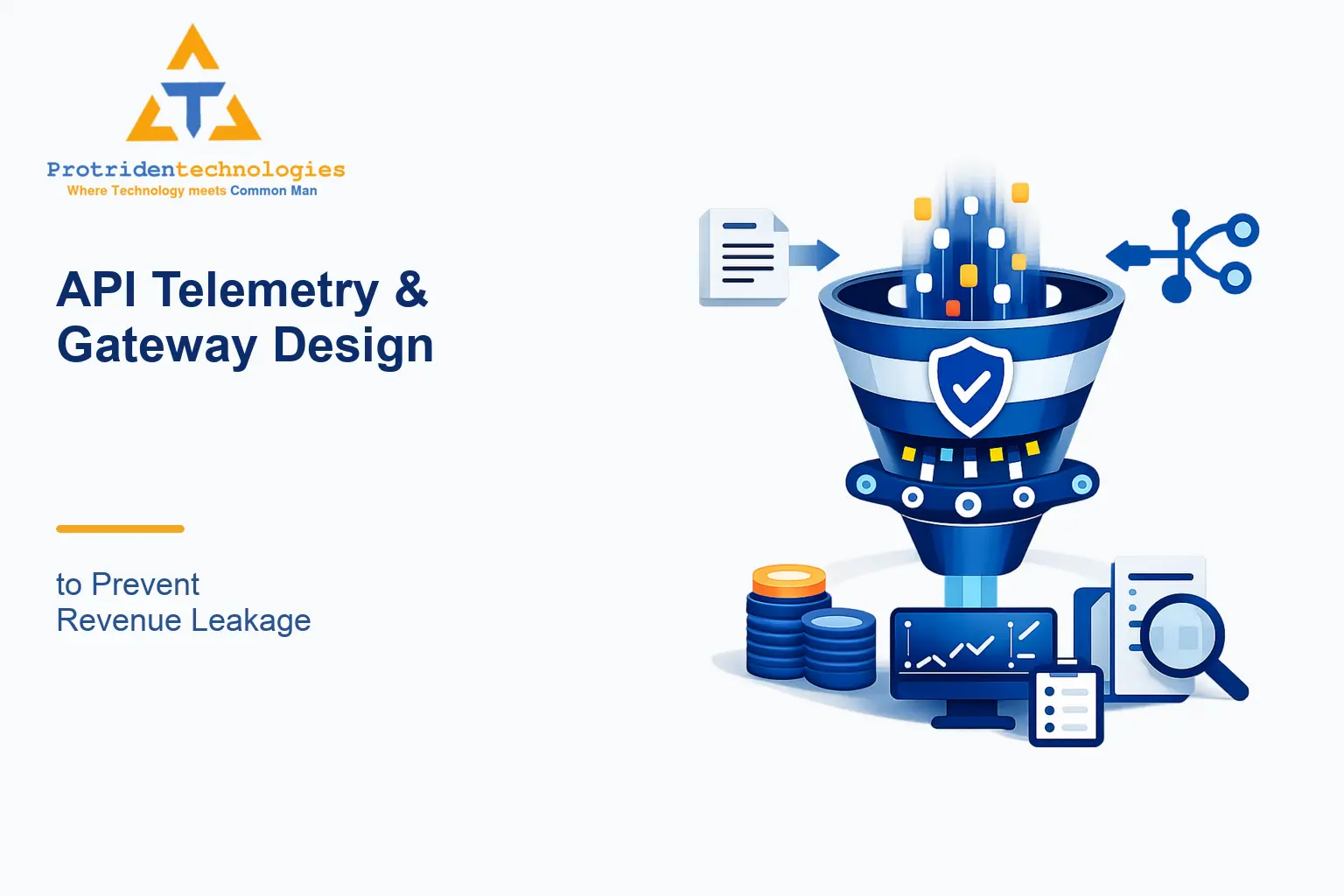
Product and payments teams at SaaS and FinTech platforms increasingly face unexplained reconciliation gaps, partner disputes and lost revenue because third-party integrations and gateways lack finance-grade telemetry. Missing or inconsistent metering, replayable logs, and gateway-level enforcement often mean usage never reaches billing pipelines.
Telemetry gaps show up as late spikes, duplicate counts, or missing events that finance flags during invoicing or audits. Teams need observable, replayable data alongside gateway controls so billing teams can reconcile reliably.
Many organizations discover the problem only after a partner dispute, a failed reconciliation or a manual audit. Fixing it requires changes across API design, gateway rules, logging, and billing integrations—not just patching a single system.
Why This Topic Matters
APIs are the plumbing of modern digital commerce; when their usage isn’t captured accurately, units of consumption don’t become recognized revenue. Finance-grade telemetry and clear separation between enforcement and accounting are essential for usage-based pricing and partner settlements. Industry guidance emphasizes that simple request counts are not sufficient; you need replayable, idempotent telemetry and traceability from gateway through aggregation into billing [S2, S1].
Observability ties operational signals to commercial outcomes: latency, retries, gateway policy impacts and dropped events all affect what should reach the ledger. API observability practices let product and payments teams correlate runtime behaviour with revenue metrics so discrepancies surface quickly and remediation workflows can be triggered [S4].
A deliberate telemetry and gateway design reduces friction during audits and partner reconciliations by producing provable, auditable records that finance and legal teams can rely on. For platforms monetizing APIs, that provability protects ARR and preserves commercial relationships [S1].
- Separating enforcement (rate-limits, access control) from accounting (metering, aggregation) prevents lost or duplicated billable units [S2].
- Collecting structured, timestamped, replayable telemetry enables reconciliation despite clock skew, retries, or late-arriving events [S2].
- Correlating API traces with billing events helps surface behavioral patterns that cause leakage—e.g., client-side retries or gateway timeouts [S4].
- Gateway-level metadata (product SKU, plan, partner ID) should travel with requests to maintain billing context end-to-end [S1].
Research references: Metered Billing for APIs: Guide for Developers and Leaders | Kong Inc.; Metered API billing needs finance-grade telemetry, not just counts; API Observability: API Telemetry Data, Pillars & Use Cases | Postman; 4 Technical Best Practices for API Monetization | Kong Inc..
Common Mistakes Businesses Make
Teams often assume that basic request counting is enough for metered billing. In practice, missing context, replayability and idempotency produce inconsistencies that only become visible at invoice time or during partner audits.
Another common error is tightly coupling enforcement logic to billing pipelines. When gateways both block and bill, retries or misapplied policies can corrupt accounting. Separating concerns and building reconciliation checkpoints reduces this risk.
Many organizations rely on ad hoc logs or manual exports for reconciliation. Without structured, audit-ready logs and automated aggregation, reconciliation is slow, error-prone and costly.
- Counting raw requests without idempotency or deduplication rules.
- Sending minimal or unstructured logs that lack billing context such as plan, partner, or SKU.
- Using gateway blocks as the single source of truth for billing decisions.
- Relying on periodic manual reconciliation instead of continuous monitoring and alerts.
- Ignoring clock skew, late-arriving telemetry or replay scenarios during aggregation.
Practical Checklist / Steps
Use this checklist to map telemetry and gateway controls to reconciliation outcomes. Each step is actionable for product, payments and platform teams; prioritize items that close the largest gaps exposed by your current reconciliation process.
- Define billing-grade telemetry contract: Specify the fields that must accompany every billable API call (timestamps with timezone/epoch, unique request ID, partner ID, plan/SKU, product version, idempotency key, outcome code). Make this a non-optional contract between API producers and the gateway.
- Separate enforcement from accounting: Implement gateway policies for enforcement (rate limits, auth) but ensure a distinct accounting pipeline captures every permitted request as a read-only event to the metering system. Do not use enforcement-only counters as the sole billing source.
- Ensure replayability and idempotency: Design telemetry so events can be replayed into aggregation pipelines without double counting. Use idempotency keys and server-side deduplication windows to prevent duplicates from client retries or network issues.
- Implement audit-ready, structured logs: Emit logs in a structured, compressed format (JSON or protobuf) with immutable timestamps and signatures where appropriate. Retain logs long enough to support disputes and audits in line with contractual and regulatory requirements.
- Correlate telemetry with trace context: Propagate trace IDs from gateway through backend services so you can correlate latency spikes, failed requests, and partial workflows with billing events for forensic analysis.
- Automate reconciliation and exception workflows: Build automated jobs that compare metered events to ledger entries and surface exceptions into ticketing systems with contextual evidence to speed investigation and resolution.
- Add gateway-level metadata enrichment: Enrich each request in the gateway with billing context (resolved plan, partner mapping, SKU) so downstream telemetry captures commercial attributes without relying on fragile client-side data.
- Monitor telemetry health and KPIs: Define KPIs for telemetry completeness, duplicate rate, ingestion latency, and reconciliation drift. Alert when telemetry metrics deviate from thresholds so issues are detected before invoices are issued.
Cost, Timeline, or Decision Factors
Cost and timeline for implementing finance-grade telemetry vary with existing platform maturity, number of integrations, regulatory needs and the complexity of pricing models. Factors include whether you have a modern API gateway, centralized logging, event streaming infrastructure, and how tightly billing is coupled to your services.
A phased approach—quick wins (metadata enrichment, structured logs), intermediate steps (idempotency, replayable aggregation), and long-term changes (ledger integration, continuous reconciliation)—often balances risk and budget while delivering measurable improvement in reconciliation accuracy.
- Platform maturity: mature gateways and central logging reduce integration effort.
- Integration surface: number of APIs and third-party partners impacts scope and testing.
- Pricing complexity: hybrid plans, credits, and entitlements add aggregation complexity.
- Compliance and retention: audit windows and regulatory needs affect storage and retention costs.
- Operational readiness: existing SRE/DevOps and finance partnerships determine speed of rollout.
Local Relevance: India, Karnataka, and Udupi
In India, platform billing and partner settlements are increasingly mission-critical as local SaaS and FinTech ecosystems adopt usage-based models. Accurate telemetry reduces commercial friction with partners and simplifies tax and compliance reporting across jurisdictions.
Kundapura and the broader Udupi district of Karnataka host a growing software services ecosystem; local product and payments teams benefit from working with vendors who understand regional operational realities, low-latency hosting options and Indian compliance expectations.
Proximity to local engineering talent and cloud regions can shorten feedback loops when instrumenting gateways and telemetry, making phased implementations and on-site collaboration more practical for Karnataka-based teams.
- Design telemetry to support local compliance and retention requirements in India.
- Leverage regional cloud zones and network topology to minimize telemetry ingestion latency.
- Engage local engineering partners familiar with Karnataka and Udupi operations for faster iterations.
How Protriden Technologies Can Help
Protriden Technologies combines API, UI/UX and backend expertise to help product and payments teams implement audit-ready telemetry, gateway policies, and reconciliation automations. Based in Kundapura, Udupi, Karnataka, the company can work alongside engineering and finance stakeholders to map telemetry to billing outcomes and remediation workflows.
Typical engagements start with a technical and commercial assessment that identifies telemetry gaps, hot-path APIs, and the highest-value reconciliation exceptions. The outcome is a prioritized roadmap linking gateway and logging changes to measurable reconciliation improvements.
- Technical assessments mapping existing APIs and gateways to billing pipelines.
- Design and implementation of structured, replayable telemetry and log retention policies.
- Gateway configuration and metadata enrichment to carry billing context end-to-end.
- Integration work: event streaming, aggregation pipelines, and ledger connectors.
- Automation of reconciliation checks and exception ticketing to accelerate remediation.
Final Thoughts
Stopping revenue leakage from APIs requires deliberate architectural choices: finance-grade telemetry, separation of enforcement and accounting, replayable logs, and automated reconciliation. These are engineering efforts with direct commercial impact—reducing disputes, shortening invoice cycles, and protecting revenue.
Start with targeted assessments that map telemetry gaps to reconciliation losses. Prioritize visibility on the APIs and partners that account for the largest reconciliation delta, and use phased delivery to demonstrate early ROI while reducing operational risk.
FAQs
What is finance-grade API telemetry and why do we need it?
Finance-grade telemetry means structured, timestamped, replayable events with billing context (partner ID, plan, SKU, idempotency key) and sufficient retention and integrity for audits. It’s needed because simple request counts can be corrupted by retries, clock skew or gateway policy differences, causing reconciliation gaps.
Can we use existing gateway logs for billing?
Gateway logs are valuable, but using them as the sole billing source can be risky. Enforcement actions, log sampling, or unstructured formats may omit crucial billing context. It’s best to enrich gateway logs and route them into a dedicated, replayable metering pipeline that’s decoupled from enforcement.
How long does it take to see measurable improvements?
Improvements depend on platform complexity and scope. Quick wins—metadata enrichment, structured logs, and reconciliation checks—can show measurable reductions in exceptions within weeks. Full ledger integration and mature reconciliation automation may take several months; timelines vary by integration surface and resources.
Do we need to change our pricing model to fix leakage?
Not necessarily. Many fixes are operational: better telemetry, idempotency, and automated reconciliation. However, complex pricing models increase aggregation complexity and should be reviewed during remediation to ensure pricing logic is versioned and testable.
What teams should be involved in this work?
Cross-functional collaboration is essential: product owners, payments and finance, platform/DevOps, API gateway and backend engineers, and legal or compliance as needed. Establishing clear ownership for telemetry, billing logic and reconciliation workflows is critical to success.
Request an API telemetry assessment from Protriden to map reconciliation gaps and get a prioritized, technical roadmap for audit-ready metering and gateway controls.
Explore our software development services or discuss your requirements with the Protriden Technologies team.